Weekly Leadership Digest
What We Learned by Watching
Good behavior with no baseline is a hope, not a plan. And leadership was never one thing to measure. It’s five.
A 3-part weekly digest from Wes & Cindy Dove
This Week's Video — What We Learned by Watching

What We Learned by Watching
By Wes Dove
I lived a version of what Cindy described while rolling out a 5S initiative with two assembly line teams. They worked side by side, building nearly identical products. One line lead embraced the process; the other pushed back at every step.
In the short term, there was little difference in output between the two lines. Over time, though, a gap surfaced, and the explanations came fast: one crew had better uptime, the other got tougher orders. Nobody ever traced it back to what those two leads did or didn’t do. When leadership is considered intangible, the gap always gets blamed on something else.
Since finding Buchanan’s article in early 2023, I’ve shared her statistic with thousands of leaders across the United States, and it’s worth repeating here, word for word: “Increased commitment can lead to a 57% improvement in discretionary effort... That greater effort produces, on average, a 20% individual performance improvement.” And every single time, that’s been received by wrinkled foreheads and scowls. Until I asked the same question Cindy just challenged you with, “Think of the best and the worst leader you have worked with.” In many cases, I actually saw the lightbulb appear above a supervisor or manager’s head as they made the connection.
From there, it was never difficult for them to picture how they gave the additional discretionary effort or how the performance improvement showed up in their own work; I know I can point to specifics from my personal experience. That tied right in with how we’ve closed every lesson we’ve shared with groups since starting our business in 2015: identify one specific thing you can apply right away and detail the result you want to achieve, then share that with whoever you report to so you can collaborate on it moving forward.
We’ve seen leaders write down action steps that would make an immediate impact on their organization’s culture and profitability. As simple as that sounds, several problems kept showing up. Follow-through and sustainability are incredibly hard. That’s where ongoing coaching earns its keep, but that’s a separate conversation. Moving an idea from paper to practice is nearly as difficult without a clear picture of what that action actually looks like. And underneath both of those, in nearly every organization we worked with, there was no baseline to start from.
For years, Cindy and I worked those behaviors with organizations across nearly every industry, and we watched them work. Then we’d hit the same wall, every single time. There was no way to tell a leader where they stood before they started, no way to show them it had moved, and no common language between two organizations doing the same work. Good behavior with no baseline is a hope, not a plan. The behaviors were never the problem; not being able to see where you started was. Even the best action steps are tough to sustain when the stuff hits the fan if you can’t measure them against a starting point. So think of the last leadership training your organization paid for. Can you say what changed? If not, was the training the problem, or was it never knowing where you stood before it started? And without knowing where you started, there’s a bigger risk most of us never see coming: you can’t be sure you’re even working on the right problem. Cindy’s going to show you what that looks like.
“Good behavior with no baseline is a hope, not a plan.”
You Can’t Coach What You Can’t See
By Cindy Dove
An organization reached out to us for coaching and development with one of their supervisors. I was the one who worked with him, and I still remember how they described him.
“He’s a really great person. He has great intentions. He gets fantastic results.”
Then came the reason for the call. People kept going to HR. Some complained about the way he communicated. Others complained that he didn’t communicate at all.
When I sat down with him, I heard the first part of that description right away. I heard how much he cared about each of his people. I also heard his frustration. Some of them seemed to need so much more from him, including conversations about things he believed had nothing to do with the job. He had a department to run, and he needed them to do their work.
So he did what results-driven leaders do and worked harder. He moved through the department quickly, talked fast and kept every conversation on task. When someone came to him with question after question, he gave a quick, sharp answer that didn’t quite answer what they asked, or he found a way around the conversation altogether.
His people saw something very different. To them, he was a supervisor who didn’t like them and cared more about the job than about them, so they pulled back. The department started missing its numbers, and even when they hit them, nobody was happy. It wasn’t everyone, but it was enough to keep HR busy.
His material handler is a good example. Each day he gave her what material the team would need, and each day she came back with questions. He heard her questioning him, so he gave her short answers and kept moving. She spent her time talking to others about him, and the team spent its time waiting on material, or waiting on checks to make sure it was right.
He was pouring everything he had into results, while his people were waiting for something he didn’t know they needed. What I saw was a leader communicating with everyone the way he is instead of the way they are. Several of his people were more reserved and more relational. When every conversation started and ended with the task, what they heard was that the task was all that mattered.
Free Session
The Cost of People You Never Measured
A 30-minute session with Wes & Cindy, approved for 0.5 SHRM and HRCI recertification credit.
Our work together came down to two shifts.
The first was people before task. Before he asked for anything, he would stop and ask, “How’s your day going?” He would listen to the answer and look for common ground. Then he would turn to the work. For him, that was a big switch.
The second was communicating with people more the way they are than the way he is, and that’s when he saw his material handler differently. She wasn’t questioning him at all. She was a blend of people- and detail-oriented, and she needed a few answers so she could do the best job possible. Once he stopped, listened and answered, she was energized and had material in place before the team needed it. The waiting stopped, the flow stayed steady and the department’s productivity and profitability climbed.
The same thing happened in his team meetings. A few people who used to push back on almost everything now got a minute or two of his time each day. The pushback stopped, and when they did speak up, what they added had value.
“I can see a big difference,” he told me. “She needed me to stop and listen and answer her questions so she could have a good flow in her day.”
He had always cared. Now his people could see it.
People require time. Not just the time you want to give them, but the time that fills their tank, not necessarily what fills yours.
* * *
Most organizations aren’t ignoring their people problems. They’re working on the wrong one, sincerely and expensively, the way he was.
So here is my question for you. Think of a people problem your organization has “worked on” more than twice without it going away. Could you be treating a symptom instead of the problem?
HR could tell something was wrong, and so could the numbers. Neither could tell anyone what it was. Most organizations measure their people that way, if they measure them at all.
“People require time. Not just the time you want to give them, but the time that fills their tank.”
Five Things, Not One
By Wes Dove
Earlier, I shared two separate experiences that had a direct impact on me deciding to write What’s Killing Your Profitability?: the HR manager who always expected me to show how my work in safety (or any other initiative I was involved with) improved productivity and the conversation with my CEO-friend that closed with me telling him he didn’t have time not to pay attention to the touchy-feely stuff. I’ve seen firsthand just how much the discretionary effort that comes through earning influence drives productivity and profitability. That said, lumping everything involved in earning that influence into the soft skills category or throwing a “leadership” tag on it has proven far too vague to measure.
Cindy and I have learned more by watching, and more recently through coaching some amazing people, than we could have ever imagined. One challenge we’ve seen even great organizations encounter when trying to measure results after attempts to address “leadership” issues has been the lack of specific behaviors to watch for. We’ve built a process that resolves this challenge, but that’s a conversation for another time. Another issue, and the one we’ll address right now, has been a significant gap in clarity for what to look for in measuring “leadership”. It’s never just one thing, it’s five — with one more crucial piece that serves as the mechanism running through each of those five.
The Framework
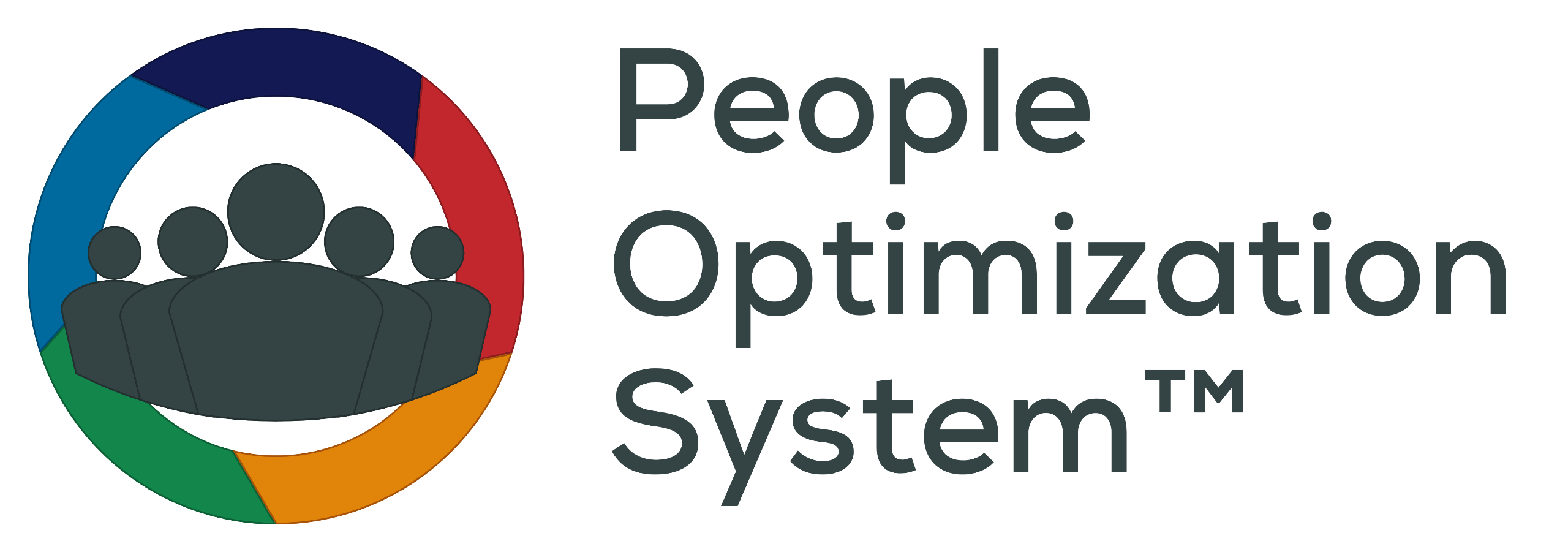
The People Optimization System
Optimization Guides for every pillar — practical systems that move what we teach from good ideas to repeatable action.
Before I break it down, take a few seconds to think about it on your own. Can you describe in just one sentence (or even in one paragraph) how you would — or currently do — measure leadership effectiveness? If we’re being honest, the idea of leadership is much too big to put a single number on, and that’s exactly why so many struggle with making it tangible. What we’ve found is that there are five things that can each fail independently — direction, values, leadership, growth, and experience — and each of those can be measured simply when we look at them on their own. Yes, leadership is one of the five. That’s the point: most organizations use the one word to cover all five at once. Communication is not a separate or sixth area, but it’s what each of the five travels through and it has a direct impact on whether our teams receive the messages we’ve sent tied to those five.
We’ve learned that measuring “leadership” alone as a single overarching idea isn’t realistic. We can, however, measure how each of those five pillars fails on its own, and that’s the whole difference. Breaking one unmeasurable word into five measurable ones is what turns an opinion into a number. Of the five, guess which one your organization is weakest in. Write it down now. As we move forward, pay close attention to whether the one you picked here was right.
“Breaking one unmeasurable word into five measurable ones is what turns an opinion into a number.”
90-DAY GUIDE: Lead Your Team Through Any Leadership Challenge
Did You Know?
Growing your leadership acumen is the fastest way to equip your team to lead through today's leadership challenges.
We've been equipping leaders like you for decades. We know you do not need another theory. You need a clear starting point and a simple system. This guide gives you both.
Download the Leadership Depth Playbook
Includes a 90-day action plan.
Just want the newsletter?
Skip the guide and get the monthly Resource Guide by email — leadership insights, no strings attached.
Already a leader who wants more?
200+ leadership lessons, live sessions twice a month with Wes & Cindy, and SHRM/HRCI credit for every lesson.
Try Leading At The Next Level Free for 14 Days »