Weekly Leadership Digest
The Attributes Compound When We Keep Sowing
Bold early stands forge traits; later seasons and more significant adversities are where we prove whether those traits became embedded into our character.
A 4-part weekly digest from Wes & Cindy Dove
This Week's Video — The Attributes Compound When We Keep Sowing
The Attributes Compound When We Keep Sowing
I need to be completely transparent here: sharing each individual adversity through this process of challenging you to make the best of your bad situations has been one of the most awkward things I’ve ever done. I’ve said repeatedly that I know mine pale in comparison to what I’ve seen so many others experience. Even more than that, though, I’d so much rather keep the past in the past and push toward the impact Cindy and I are working to make for each client we serve. Still yet, the ones I’ve lived through are what I have to work with — the same goes for you — but focusing only on what lies ahead often means we completely miss the seeds hidden within those adversities as well as the greater benefit we could pull from those seeds. Reflection has to happen, whether we’re naturally wired for it or not.
When we’re willing to discipline ourselves to invest in reflection, to identify then nurture those seeds, we create a starting point for developing each of the leadership attributes we’ve worked through to this point. The earlier we establish that habit, the more we stand to gain as those attributes compound — especially when we continue sowing into the relationships we build along the way. Even then, though, I’m not suggesting we sow blindly or indefinitely in places where those seeds stand no chance whatsoever of growing.
Early on, even the most minor adversity can seem insurmountable. Bold early stands forge traits; later seasons and more significant adversities are where we prove whether those traits became embedded into our character. Uncertainty and disappointment become a competitive advantage only if we continue sowing along the way, and only if we continue strengthening each of those leadership attributes.
All eleven that Napoleon Hill outlined in Think and Grow Rich have been instrumental for me over the years, and I’d bet you can say the same if you look back over your journey through the lens we’ve polished here. But since starting our business in 2015, and especially since moving into it full time in late 2017, the habit of doing more than we were paid for and earning cooperation from the people we interact with have proven to be as critical as anything else we’ve done.
Make no mistake, maintaining a pleasing personality, increasing my own practice of sympathy and understanding, and assuming full responsibility have played key roles as well. Thankfully, the effort I’ve put into building each has made each of the others stronger. Had we slipped into a spirit of bitterness at any point along the way that compounding would have stalled (and possibly collapsed completely), sacrificing much or all of the harvest we’ve pulled — and continue to pull — from each seed. As those leadership attributes continue to compound over time, the influence we earn outlives any individual crisis. We’ll look at that in more detail next. Before that, think about a recent decision you were faced with. Where did extra effort, cooperation, or a pleasing approach lag? Plan one strengthening action you can take right away, and think about how you can base that action on a more established habit you’ve created through one of your previous adversities.
“Uncertainty and disappointment become a competitive advantage only if we continue sowing along the way.”
Quiet Strength
Influence That Outlives the Crisis
Seeds from each adversity grow strongest when we keep sowing after the dramatic chapter ends. Leadership attributes do not mature in a single crisis; they compound when we refuse to treat the latest setback as the last word. As we hone each attribute through individual, and often smaller adversities, that compounding effect shows itself when we find ourselves handling significant issues with an ease we likely never experienced — or even imagined — early on. But if we stop sowing at any point along the way, the compounding ends. And so does much of the influence we’ve been working to earn through the process.
Chapter 6 of Leveraging Leadership Growth was focused on “Influence Over Authority” so I won’t build that entire idea out here. What I will do briefly, though, is stress how much more important influence is as we face each adversity. The authority that accompanies a title or a position can certainly lead to immediate results, especially when the chips are down, but only to the degree that someone is required to comply before facing consequences. Even then, authority can fall drastically short if the person holding authority hasn’t been consistent in maintaining accountability along the way.
If we’ve invested enough time, energy, and compassion to earn genuine influence, regardless of any title we may have that carries perceived authority, the discretionary effort we receive from those around us is significantly greater than the bare minimum required. As we’re in the midst of an adversity, that matters. But when we keep sowing and begin to see each leadership attribute compounding on the other, the influence we’re earning outlives the crisis.
I’ve already alluded to several opportunities and relationships that have come since the “kick in the pants” conversation in late 2024. I could list the financial benefits we’ve seen since as well, each of which has resulted in at least as much annual business as we’d ever done with that one organization. I could also detail several very specific lessons we’ve pulled from it since. Rather than me going into all that, I want you to think about the wins you had after a recent tough situation. I won’t speak for you, but I can say without question that I’ve never captured the full benefit from an adversity I wasn’t willing to review closely for every possible seed hidden within it.
Pivoting through relational and professional tests, recent or ones from years ago, builds the only influence that lasts. This kind of influence is still standing when any given institution, client, or slight is a distant memory. Our responsibility is to keep sowing and nurturing the seeds we pull from our adversities, enhancing our effectiveness in each leadership attribute we’ve developed through the process, so we can earn influence that outlives the crisis. As we do, each adversity can compound toward the legacy we hope to leave behind. Before we look at that in detail, think about one example where you chose to keep sowing regardless of whether you felt like it or not. Who do you know that may need to hear that story? Think about the ripple effect sharing it with them could have.
“Leadership attributes do not mature in a single crisis; they compound when we refuse to treat the latest setback as the last word.”
Core Lesson
Recent Adversity Turns Sowing into Legacy
For those of us who are fast-paced and task-oriented, those high D’s if you’re familiar with the DISC Model of Human Behavior, slowing down long enough to truly reflect on an adversity is tough enough. Sitting still to search for every possible seed of equal or greater benefit hidden within it can be excruciating. Here’s the good news: we don’t have to pretend that we like it, we just have to develop the discipline to do it! I like french fries, greasy New York style pizza, and chips and salsa — but each of those played a direct role in me weighing 260 pounds even when I was working out at least five days every week. I didn’t like making the choice to (almost) completely give up all of them. The result, dropping more than 50 pounds in the two years that followed (and keeping it off), was worth it. And so is forcing myself to reflect.

Effective Communication
The DISC Model of Human Behavior
See how your behavioral style shapes the way you communicate, lead, and respond when things get tough.
Pushing forward to continue sowing, even when we really want to take a break after an extremely rough patch, is exactly how the leadership attributes we’ve built along the way compound. Reflecting on the relationships that were actually one-way streets rather than being as solid as they appeared is a necessity for identifying any potential lesson we can pull from a tough situation and fight off the bitterness that inevitably comes when we feel betrayed. The harvest that follows grows exponentially through the influence we earn; that’s what outlasts any given crisis.
Recent adversities often feel like they should be easier after everything already survived, but they are the real exam of whether the sowing was genuine. Making the best of these situations isn’t about collecting a prettier story for the end of the book (figuratively or literally) — it’s about choosing to keep planting for people who will harvest later. When we treat the latest disappointment as more soil instead of proof that the earlier stands “should have been enough,” influence compounds into legacy.
The most recent adversity we faced is nearly always what reveals our next need. Courageous consistency plants the next seed, unseen extra effort and cooperative relationships (the ones that are genuinely reciprocal) nurture the seed. Making the best of recent reflections isn’t about writing a neater ending. It’s intentional preparation that turns a lifetime of bad situations into a chain of purpose-, values-, and relationship-driven readiness others can walk. Before I give you a set of questions designed to help you mine your most recent adversities for legacy seeds, look back at each theme we’ve worked through to this point — how early adversities create a foundation for profitable leadership, the importance of purpose in pushing through the more significant adversities we face over time, how strong values shape our response to each adversity, and the role relationships play in those adversities — and identify how making one simple pivot can amplify the leadership impact you want to leave (not just the results you want to see in the next quarter).
“When we treat the latest disappointment as more soil instead of proof that the earlier stands ‘should have been enough,’ influence compounds into legacy.”
Mining Recent Seasons
Mining Recent Adversities for Legacy Seeds
If you pressed me to nail down one specific moral to this story, it would be to expect the best while preparing for the worst. I don’t say to be negative, we can find plenty of doom and gloom by simply tuning into anything calling itself news. The reality is that there will never be a perfect time for anything or a break from the adversities we’re forced to deal with just because we recently fought through something significant. The silver lining I’ve found is that the reflection I’ve never enjoyed (and still have to force myself to engage in today) is exactly where we can identify the seeds hidden within each adversity so we have a shot at taking ownership of our equal or greater benefit. As we do that consistently, through the big ones and the small ones, the compounding continues and we’re more equipped for whatever follows. Expecting the best provides us with the level of awareness necessary for recognizing it when it happens.
I’ve mentioned the legacy idea a few times already, and I drove that point even harder throughout Leveraging Leadership Growth. In complete transparency, I’ve seen very few people willing to continue sowing through and beyond their toughest seasons without having a clear picture of the lasting impact they want to have on others around them. When it’s just about us, that juice sometimes ain’t worth the squeeze. But when we accept the responsibility for passing on the lessons we’ve learned through our own adversities with hopes of making a difference for the people following behind us, a legacy is indeed what we’ll leave.
With that in mind, invest the time to work through these five questions designed to help you mine your recent adversities for legacy seeds:
- What recent adversity or quiet disappointment still carries weight?
- What blind spot or habit did it reveal, and what seed (e.g., doing more than paid for, cooperation, or a pleasing personality) was hidden?
- How could a decisive choice to keep sowing — rather than withdraw — strengthen your definiteness of plans or your relationships?
- In what ways might nurturing this seed improve your influence without title and the legacy people will actually feel?
- What three small, immediate actions can you take this week to plant and nurture it?
The energy and focus you dedicate to this can turn recent bad situations into leadership gold — IF you start treating today’s disappointments as tomorrow’s harvest from this point forward. When you do, my hope is that you’ll be ready to lean into the full harvest available to you and lead from wherever you stand — so that’s how we’ll tie all this together.
“Expect the best while preparing for the worst.”

Coming November 19, 2026
Leveraging Leadership Growth
Strength Through Great Professional Relationships — with a Foreword by Cindy Dove. The final chapter is all about the legacy we sow.
90-DAY GUIDE: Lead Your Team Through Any Leadership Challenge
Did You Know?
Growing your leadership acumen is the fastest way to equip your team to lead through today's leadership challenges.
We've been equipping leaders like you for decades. We know you do not need another theory. You need a clear starting point and a simple system. This guide gives you both.
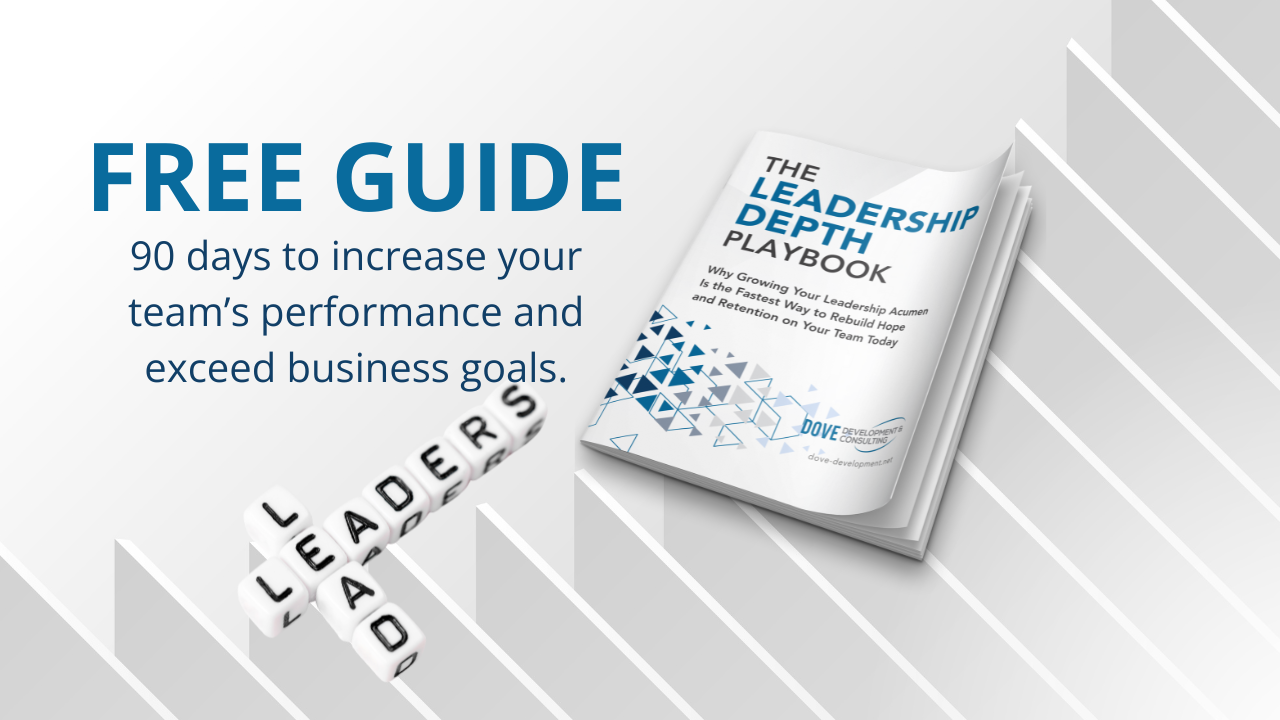
Download the Leadership Depth Playbook
Includes a 90-day action plan.
Just want the newsletter?
Skip the guide and get the monthly Resource Guide by email — leadership insights, no strings attached.