
Integrating Humility into Structure
I’ve referenced humility multiple times throughout our look at leveraging leadership growth; that hasn’t been accidental. Without intentionally building a humble approach into each, we can’t reasonably expect to develop real strength through great professional relationships - if we can establish those relationships at all. With that in mind, should we have any expectation of creating a framework for relational leadership if we’re not completely devoted to integrating humility into the structure?
I’ve mentioned some folks who Cindy and I have met with over the last decade or so that had me nothing short of star-struck leading up to our time with them; Mark Cole, Carly Fiorina, and Dan Pink to name a few. Each had a worldwide presence in the space where our business operates. Having been influenced so heavily by them prior to those individual interactions, I had placed each on a bit of a pedestal. Thankfully, they were all quick to make it abundantly clear that I had no reason to be intimidated by their reputation. That humility allowed me to absorb so much more from them than I ever could have if there would have been even a hint of arrogance, in that moment and ever since. I can say the same for each of the mentors I’ve interacted with directly over the last three decades - I just mentioned Mark, Carly, and Dan for perspective here since they have so much more of a public persona.
I’ve been into rock music, specifically the 80s hair band genre, since I was a kid. I’ve seen dozens of bands live and I’ve met quite a few of my favorite musicians. Whether it’s been through brief interactions after shows or through the interviews I’ve helped host on my friend’s YouTube channel over the last several years, most have been every bit as approachable as Mark, Carly, and Dan. That said, there have been a few who were not. I remember one particular incident at a concert in the late 90s where the lead singer for a band I had loved since the mid 80s was a complete jackass to everyone in the audience from the time he took the stage. I’ve struggled to listen to his band’s music since. Through the interview process, we’ve experienced a few who were less than appreciative for our willingness to provide them with airtime on a channel with 16,000 subscribers. While none have said so directly, some have certainly given us the impression that we’re not deserving of their time. Reality check: 1988 is long gone, dude…
Whether you can relate to any of those examples directly or not, I hope I’ve painted a picture showing the difference between humility and arrogance in initiating or building effective relationships. While most of us don’t see ourselves as having the prominence (or ego’s) of those I just referenced, don’t underestimate how many of the folks who look to us for leadership may view us similarly to how I viewed the ones I’ve detailed here.
Today, many of the people Cindy and I meet for the first time have heard us speak, read something we’ve published, or seen something about us on social media that makes us look like more a big deal than we really are. I’ve shared my background and quite a bunch of my shortcomings already so there’s no need to do it again. But with those always fresh in my mind, there can be a wide gap between what someone’s perception of me and how I view myself. The challenge often comes from being pulled in different directions, and how that impacts the message we send in that initial interaction. While we may indeed be stretched thin, it can easily tell that person who’s counting on us for leadership that we don’t value them.
Regardless of the complexity of our roles or the priorities we’re juggling, we must work to embed humility as a core element of everything we do. Humility is the heartbeat of relational leadership. Before we move to looking at the intentional investment we’ll each need to make into developing this framework, consider what you can do to add a humble element to your approach.
Investing in the Framework
Assuming we’ve taken the time to establish a relational foundation, the most effective way we can integrate humility into the structure is by continuously investing in the framework. In most cases, the idea of investments ties to finances. For a long-lasting framework that truly leverages leadership growth, our investments should be in nurturing each professional relationship we have as well as the new ones we create.
We can all come up with a list of the people in our lives who rarely pop onto our radar without having something very specific they need from us. Whether it’s a friend, a family member, or a business associate, regardless of how much we genuinely care for the individual, there’s little strength for anyone to draw from that kind of relationship. It may fill a need in the moment but even that will have a diminishing return. I’ve never seen someone offer their best, indefinitely, to a person who only makes time for them when there’s an immediate need.
In chapter twelve of What’s KILLING Your Profitability?, titled “Answering the Cry for Help”, I shared one of the most valuable lessons I learned from Terry while he was the management sponsor for our behavior-based safety process. If you’re not familiar with the entire story behind it, get the book. For our purposes here, the overarching idea is what applies: Control what you can control.
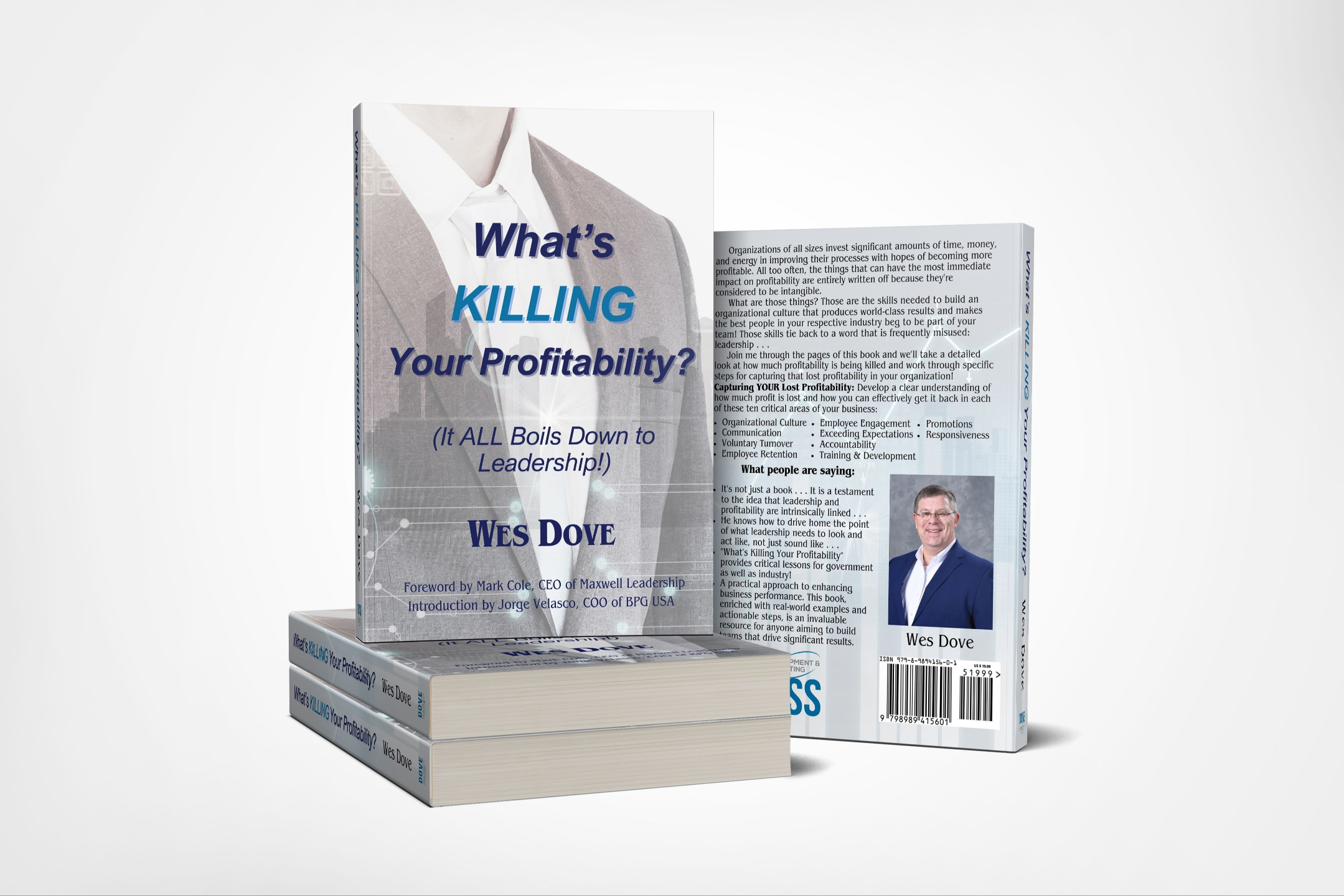
There’s very little I can do to build a stronger connection with someone who has no interest in practicing the art of responsiveness - especially someone who consistently makes it abundantly clear that I don’t fit into their schedule until they have a pressing need that only I can fill. That’s their choice, not mine. What I can control, though, is the value I place on those I interact with, be that routinely or just occasionally. Whether it’s someone mentoring me, an individual I have the privilege of providing mentorship to, or a business associate I’m building a relationship with, I have complete control over how I nurture the structure of our relational framework.
My consistent investment sustains the framework’s effectiveness. When I’m willing to show value by making those ongoing investments into each relationship, the ones that bear the most fruit will be abundantly clear. Those will be the ones where we’ll experience real influence, and we’ll look at how that influence strengthens the overall framework next. For now, think about how (and where) you can dedicate time in nurturing your relational strategy. While we may not need to disconnect completely, there will be some relationships that don’t justify significant investments - especially when the other party has shown time and again that they don’t see mutual value. Control what you can control and invest where the return goes both ways.
Leading with Influential Structure
I’ve based everything we’ve looked at to this point on the idea of Leveraging Leadership Growth and the strength you and I can each gain through great professional relationships. The framework for relational leadership is crucial, intentionally integrating humility and investing appropriately so we can nurture each relationship we create and build. Then, and only then, will we have any hope of earning the kind of influence necessary to drive the framework’s success.
In the third chapter of What’s KILLING Your Profitability? I explained how “It All Starts at the Top” by detailing the difference between leading a team and managing a process. I emphasized that while the skills required vary greatly, the results we achieve will be exponentially better with both in place. While the authority that accompanies a management role is often critical in driving profitability within an organization, it won’t necessarily yield the same result as we work to strengthen professional relationships - especially since authority won’t be a factor in many of the most important relationships we’ll be nurturing.
In building our relational framework, more than any other aspect of our professional lives, influence takes precedence over authority. As I’ve shared several times here previously, I’ve never had positional authority over anyone; but every role I’ve had since early 2000 has required me to achieve results through other team members. As challenging as it was just to understand what that required early on, figuring out how to crack that nut and constantly working to earn influence with each group I’ve interacted with since has indeed helped me establish some amazing professional relationships and it’s yielded the kind of discretionary effort that I would have never seen through authority alone. That influence, more than any other thing I can point to, has allowed me to leverage my own leadership growth.
I often define leadership as the act of serving others; not by doing for them what they can and should be doing for themselves, but by doing for them what they cannot do for themselves so that everything they are able to do is more effective. That act of serving others is the best way I’ve found to earn the kind of influence that drives a relational framework’s success long-term, the kind with measurable impact. Before working through the importance of measuring relational success, though, I’ll challenge you to identify the opportunities you have right now to lead tasks through the influence you’ve earned rather than from the authority of your position or title. If your list is shorter than you’d like, look for ways to earn more influence so you can expand that list.